Finn Was Shocked to Witness Ivy Murder Dylan at the Hospital — The Bold and the Beautiful Spoilers
The world had already been closing in on Dylan long before she ever arrived at the hospital. Her life had been shrinking quietly, not through dramatic confrontations or loud pleas for help, but through a slow erosion of safety, stability, and trust. Desperation rarely announces itself. It whispers.
It convinces people to accept less than they deserve, to mistake survival for living, and to believe that invisibility is a form of protection. By the time Dylan was found injured and rushed into emergency care, the tragedy unfolding around her had already been set in motion by a series of choices driven not by cruelty alone, but by obsession, control, and emotional cowardice.




At the center of it all was Ivy.
What began as discomfort with Dylan’s presence had metastasized into something far more dangerous. Ivy no longer saw Dylan as a person with limits, fears, and vulnerabilities. Instead, she had reduced her to a problem—an obstacle to be removed with as little disruption as possible.
In Ivy’s mind, money was the answer. A transaction. A way to make Dylan disappear without getting her hands dirty. But money without support is not help. It is abandonment disguised as generosity.
Dylan had no real safety net. No stable job. No emotional anchor strong enough to survive being pushed out of her world. The cash Ivy offered gave the illusion of choice, but in reality, it left Dylan with none. She couldn’t afford to leave Los Angeles. She couldn’t afford to start over. What she could do was survive—sleep in her car, keep moving, stay small, stay unseen. She convinced herself that distance from Will and Electra was enough, that if she just stayed quiet, the danger would pass.
Will and Electra, however, saw the truth Dylan refused to face. Living in a car was not freedom. It was exposure. Every night was a negotiation with fear, exhaustion, and the constant risk of being noticed by the wrong person. That was why they had begged her to accept a hotel room, to let them help.
To them, it wasn’t charity. It was protection. To Dylan, it was a painful reminder of how much control she had already lost.
And then the worst happened.
Someone noticed the car. Someone noticed the bags. In a city where desperation and greed intersect far too easily, that was all it took. The attack was fast, disorienting, and brutal. Dylan fought back, not out of heroism, but out of instinct—the instinct to protect the last fragments of her life. It only made things worse. When she was finally found, she was barely conscious, her body battered, her future uncertain.
The irony was cruel. The hospital, a place meant for healing, became the stage for consequences that had been building in silence for months. For doctors and nurses, Dylan was another emergency case. But for those who loved her, her presence was a reckoning. Proof that what had been dismissed as manageable was, in fact, deadly serious.
When Dylan stabilized, the emotional fallout began. Relief gave way to shame, anger, and grief. Being alive didn’t erase the trauma or the bitter knowledge that this could have been prevented. When Will and Electra finally spoke to her, their concern was tangled with guilt—the kind that comes from realizing your worst fears were justified.
Dylan’s confession didn’t come easily. It wasn’t dramatic or vengeful. It was tired. Honest. She spoke of Ivy not with rage, but with quiet devastation. Ivy hadn’t attacked her physically. She hadn’t threatened her directly. But every road that led Dylan to that hospital traced back to Ivy’s decision to push her out without caring where she landed.
Indirect responsibility is harder to confront because it hides behind plausible deniability. But the truth didn’t need embellishment. It was damning on its own.
And that truth changed everything.4
As a patient, Dylan was no longer invisible. She had witnesses. She had protection. She had a voice. Ivy’s control depended on Dylan remaining isolated and desperate. Hospitalization destroyed that dynamic. For the first time, Ivy faced real consequences—ones that couldn’t be brushed aside with excuses or money. A criminal investigation, even an indirect one, loomed.
If Dylan connected the dots between pressure and harm, Ivy’s carefully crafted image would collapse. The “help” would look like hush money. The distance would look like coercion.
Fear began to consume Ivy.
Fear sharpened by the realization that Dylan’s survival was a threat. As long as Dylan lived, the truth remained dangerous. As long as she could speak, Ivy’s world was at risk of unraveling. And so Ivy made a decision that crossed every remaining moral line.
She didn’t arrive at the hospital in a panic. She came with terrifying calm. A stillness born not of certainty, but of desperation hardened into resolve. Every step through the sliding doors felt irreversible, but turning back felt impossible. In her mind, she wasn’t ending a life—she was ending a problem. Language became her shield, softening the reality she couldn’t bear to face.
Dylan, meanwhile, lay awake in her hospital bed, pain dulled but emotions raw. Survival hadn’t brought peace. It had brought clarity. She understood now how close she had come to disappearing quietly, how easily her suffering could have been dismissed. Will’s face lingered in her thoughts, not as comfort, but as something unresolved—love tangled with regret. She hadn’t yet decided what she would say. Only that silence was no longer an option.
She never got the chance.
Ivy’s entrance into the room was disturbingly ordinary. No alarms. No interruptions. Hospitals are built on trust—the assumption that those who walk their halls mean no harm. That trust became Ivy’s greatest weapon. When Dylan recognized her, confusion flickered, followed by fear. Ivy didn’t shout. She didn’t rage. Her presence was cold, controlled, final.
What happened next was swift and horrifying in its restraint.
There was no dramatic struggle. No last-minute rescue. Just intent. When it was over, the machines that had once monitored Dylan’s fragile return to life now recorded absence instead. She had survived the streets, the violence, the neglect—only to be murdered in the place meant to protect her.
The discovery shattered the hospital’s fragile sense of order. Nurses rushed. Doctors tried. But there was nothing to be done. Dylan’s death landed like a void, erasing hope and leaving behind unbearable questions. This wasn’t an accident. This wasn’t fate. This was murder.
And Finn saw it.
Finn, arriving unexpectedly, witnessed the aftermath—and the truth—before Ivy could hide it. The shock was paralyzing. Ivy, the woman who had insisted she only wanted peace, had crossed into something irredeemable. Finn’s silence wasn’t hesitation. It was disbelief. The kind that fractures reality and leaves no room for denial.
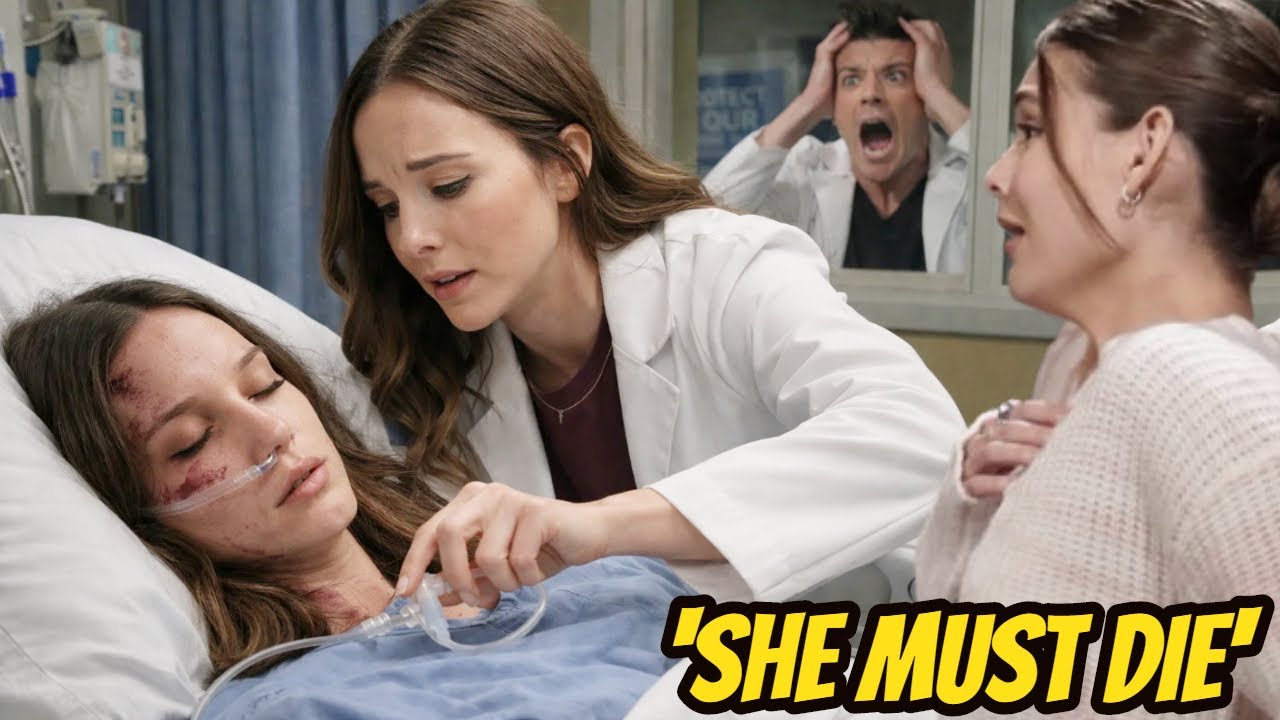
Will’s grief was delayed by shock. Dylan was supposed to recover. She was supposed to speak. She was supposed to live. When the truth finally sank in, guilt flooded him. Because in hindsight, love always feels insufficient. Every moment he hadn’t pushed harder replayed in his mind.
Electra’s grief burned differently—sharper, angrier. Dylan hadn’t just died. She had been erased by someone who believed control mattered more than human life.
And Ivy?
Ivy had finally achieved what she thought she wanted—silence.
But silence has consequences.
Dylan’s death didn’t bury the truth. It detonated it. Finn was now a witness. The hospital was now a crime scene. And Ivy’s actions, once hidden behind rationalizations and money, were exposed in their most brutal form.
Dylan’s story didn’t end in weakness. It ended in revelation. Her life—and her death—forced everyone to confront the danger of obsession unchecked by empathy, of power wielded without accountability. Pushing someone out doesn’t make them disappear. Sometimes it ensures that when the truth finally surfaces, it does so with devastating force.
And this time, there would be no more silence.