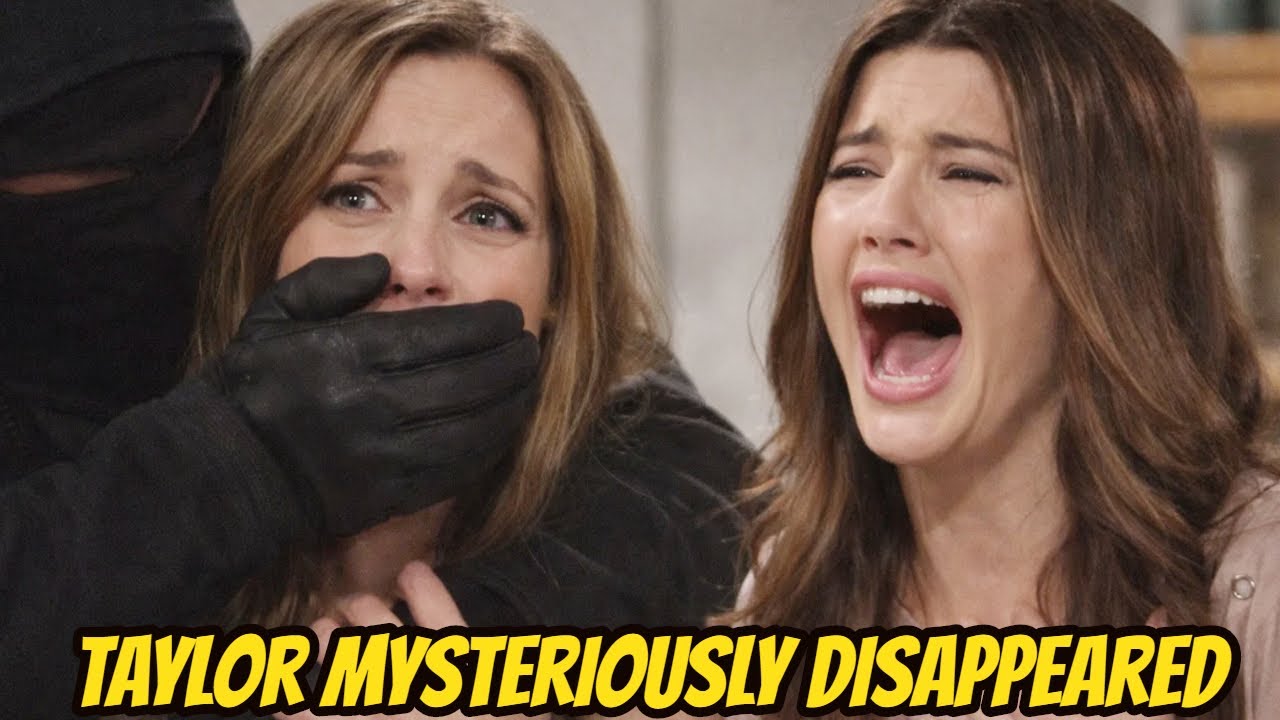
The Bold and the Beautiful is once again leaning into its darkest, most psychologically charged territory as Taylor Hayes’ sudden disappearance sends shockwaves through Los Angeles—and resurrects fears many believed had finally been laid to rest.
What began as a private moral reckoning has spiraled into a full-blown crisis, one that threatens not only Taylor’s life but the fragile stability of everyone connected to her. And at the center of the growing dread stands a name no one wants to say aloud, yet no one can ignore: Sheila Carter.
Taylor Hayes has always been the woman who helped others confront hard truths. A psychiatrist by profession and a moral compass by reputation, she built her life on discipline, restraint, and emotional boundaries. Yet in a cruel twist of irony, it was her own suppressed desire that proved to be her undoing. Her emotional connection to Deacon Sharpe—formed




through shared vulnerability, loneliness, and mutual understanding—slowly eroded the walls she had spent decades fortifying. This was not a reckless affair born of impulse, but a deliberate crossing of lines she knew better than to cross. And that knowledge made the consequences all the more devastating.
Taylor’s confession to Deacon wasn’t romantic or hopeful. It was raw, desperate, and burdened with awareness. Both of them knew exactly who Deacon was, exactly what his history with Sheila meant, and exactly how dangerous it was to invite emotion into that volatile equation. There were no promises of a future, no illusions of happily-ever-after—only the acknowledgment that something irreversible had been set in motion. Even in the intimacy of the moment, dread lingered, as though fate itself were waiting to collect its price.
That price arrived quietly.
Sheila Carter did not discover the betrayal through confrontation or confession. Instead, it revealed itself the way the most dangerous truths often do—through fragments, overheard words, a trace left behind by people who believed themselves safe from scrutiny. To anyone else, the evidence might have seemed ambiguous. To Sheila, it was unmistakable confirmation. And betrayal, to Sheila, is never just emotional pain. It is theft.
In her fractured worldview, Deacon was not a man capable of choosing someone else. He was something she believed she had earned through shared suffering and obsession. Taylor, therefore, was not simply a rival. She was an interloper—a moral authority who dared to want what Sheila considered hers by right. That perception didn’t ignite explosive rage. It ignited something far more dangerous: cold, calculated purpose.
Sheila’s response was not loud. It was methodical. She observed. She planned. She refined her anger into strategy. Gone were the impulsive mistakes of her past. This version of Sheila understood that fear is most powerful when its source remains unseen. And so, Taylor didn’t vanish in violence or spectacle. There was no shattered glass, no struggle, no dramatic farewell. There was only absence.
Missed appointments. Unanswered calls. Silence.
At first, those closest to Taylor tried to rationalize it. She had always carried the weight of others’ pain, and emotional withdrawal wasn’t unheard of. But as hours turned into days, that explanation collapsed under the certainty that something was profoundly wrong. Taylor didn’t disappear without reason. She didn’t abandon responsibility without warning.
Steffy Forrester felt that truth before anyone else dared to voice it. The unease settled in her chest like a stone, driven not by evidence but by instinct. She knew her mother. This silence was unnatural—and therefore terrifying. With every unanswered message, Steffy’s fear sharpened into resolve. This wasn’t retreat. This was danger.
And hovering over every unspoken conversation was Sheila’s name.
What unsettled Steffy most wasn’t proof of Sheila’s involvement—it was the lack of it. There were no sightings, no outbursts, no dramatic threats. Sheila had receded into the background, her presence felt only through the tension she left behind.
That restraint mirrored Taylor’s disappearance too closely to ignore. Steffy understood with chilling clarity that if Sheila was involved, the silence itself was the weapon. Patience in Sheila’s hands had always been more dangerous than rage.
Meanwhile, Sheila moved with unnerving calm. To the outside world, she appeared unchanged, even softened. But beneath that surface, her thoughts sharpened into instruments of control. In her mind, removing Taylor wasn’t cruelty—it was balance. The world had always cast Sheila as chaos incarnate, yet she believed chaos had been inflicted upon her first through rejection, betrayal, and erasure. Taylor’s involvement with Deacon was proof that nothing Sheila valued was ever truly safe.
Deacon, drowning in guilt, felt Taylor’s absence as a personal indictment. He knew with painful clarity that whatever had happened to her was inseparable from what they had shared. The passion that once felt like refuge now revealed itself as a catalyst for destruction. And Sheila’s silence haunted him more than any accusation could have. He knew her well enough to understand: quiet meant preparation.
Hope Logan, too, felt the shift—though she couldn’t fully explain it. Taylor’s disappearance cracked open a vulnerability she thought she’d buried. She felt watched, assessed, as though someone were measuring her routines and weaknesses.
That unease eroded her sense of safety, turning ordinary moments into sources of dread. And in Sheila’s twisted logic, Hope represented the ultimate leverage. Hurting her would shatter Deacon far more completely than confronting Taylor ever could.
Now, as the mystery deepens, a chilling question emerges: with Taylor gone, will Sheila redirect her focus—and her obsession—toward someone else? Speculation is mounting that Luna could become Sheila’s next target, a replacement pawn in her carefully constructed game. Luna’s proximity, vulnerability, and emotional openness make her dangerously accessible to someone who thrives on manipulation.
As days pass with no sign of Taylor, concern hardens into crisis. The possibility that she is alive but deliberately hidden becomes both hope and horror. It means she may be suffering somewhere unseen, aware of the fear her absence has unleashed, unable to reach those she loves.
That thought fuels Steffy’s determination even as it threatens to break her.
The story has now crossed a point of no return. Taylor’s disappearance is no longer a mystery—it is a declaration. Boundaries have been crossed. Debts have been incurred. And silence itself has become Sheila Carter’s most lethal weapon.
The question is no longer whether Sheila has returned to her darkest nature. The question is how far she is willing to go this time—and whether anyone will stop her before the loss becomes irreversible.